Services
Certified Arborist
A certified arborist knows when a tree can be saved, when it should come down, and how to keep the rest of your trees healthy. Robin does every estimate.
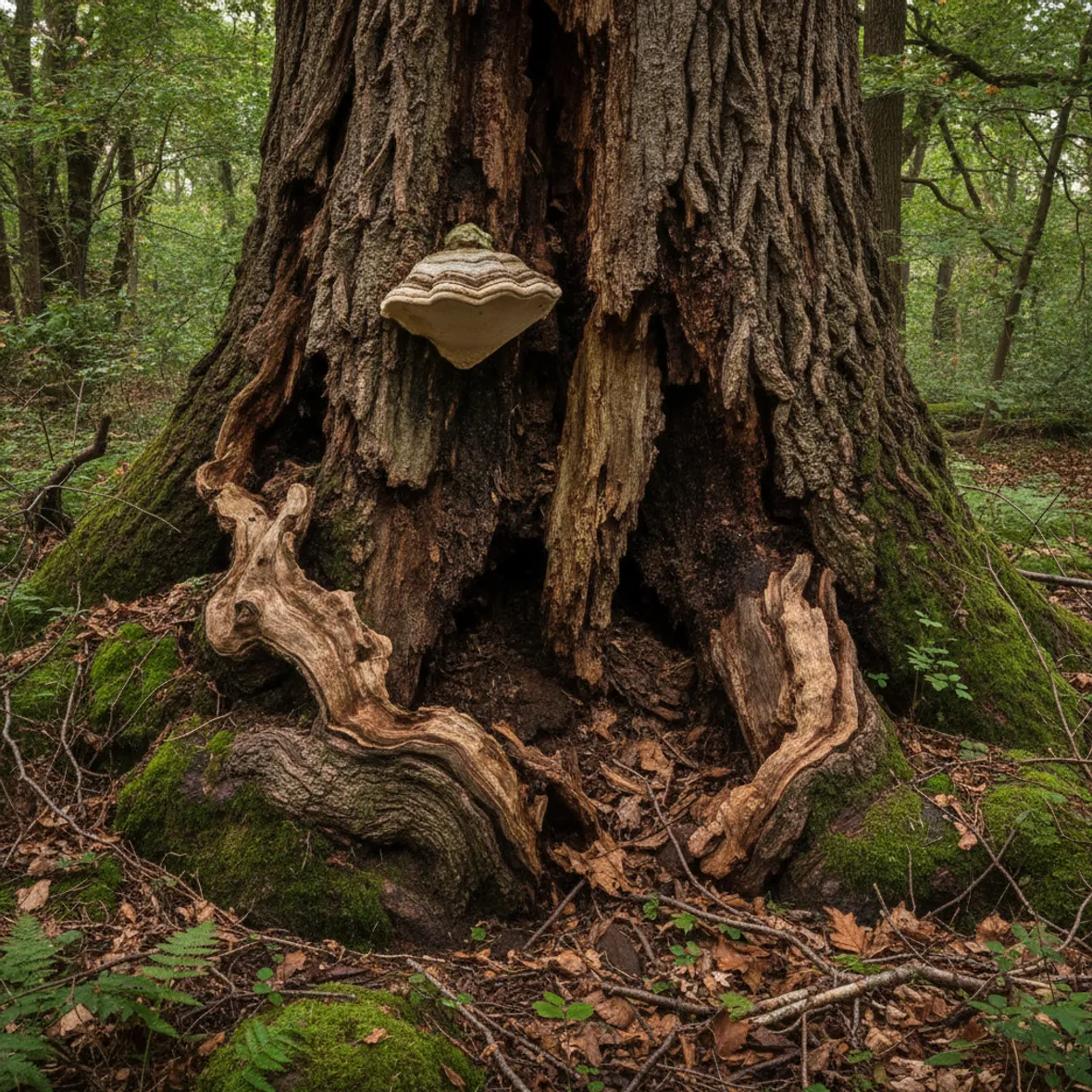
- Certified arborist Robin holds the credential and does every estimate
- 25+ years A quarter century of north Georgia trees
- 40+ years combined Larry and Robin between them, in the trade
- Free estimates The arborist looks at your tree herself
What a certified arborist actually does
A certified arborist is a tree professional who has passed a comprehensive exam on how trees grow, fail, and heal, and who keeps that knowledge current. In plain terms, it is the difference between someone who cuts trees and someone who understands them. Robin is our certified arborist, and she is the one who looks at your tree before any work is quoted or done.
That matters because most tree decisions are judgment calls. Is this tree dying or just stressed? Will this limb fail, or hold another decade? Can this tree be saved with a few good cuts, or has it become a hazard? A certified arborist is trained to answer those questions with reasons, not guesses, and to recommend the least drastic option that actually solves the problem.
When it is worth calling an arborist
A few situations where a trained eye pays for itself.
A big tree close to the house
Before you assume a large tree has to go, an arborist can tell you whether it is sound or a genuine risk.
A tree that looks sick
Thinning leaves, dead patches, fungus, or oozing bark are worth a diagnosis before they spread or fail.
After a storm
An arborist can judge whether a damaged tree can be saved and made safe, or whether it needs to come down.
Learn more →A weak or split union
Two trunks growing from one point, or a cracked branch union, may be bracing candidates rather than removals.
Before you build or buy
A tree survey before construction or a home purchase flags which trees are assets and which are liabilities.
Planning for the long term
Which trees to keep, prune, or replace, and how to keep the rest healthy, is exactly what an assessment is for.
What a tree assessment covers
| What she checks | What it tells her |
|---|---|
| Roots and base | Decay, heaving, girdling roots, or soil movement that undermine stability |
| Trunk and bark | Cracks, cavities, fungus, and old wounds that signal internal decay |
| Branch unions | Weak, included, or split attachments likely to fail under load |
| Canopy and leaves | Dieback, thinning, and discoloration that point to stress or disease |
| Lean and load | How the tree sits, what it overhangs, and what a failure would hit |
| Site and history | Recent construction, grade changes, and past damage affecting the tree |
Cabling and bracing, when a tree is worth keeping
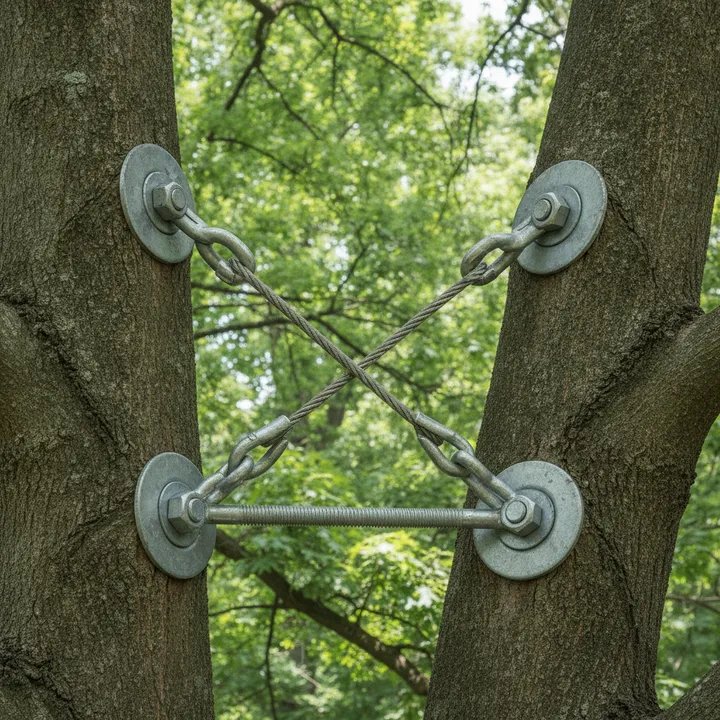
Not every structural problem means a tree has to come down. A tree with two competing trunks, or a heavy limb on a weak union, can sometimes be supported with cabling and bracing: hardware installed high in the canopy that shares the load and reduces the chance of a split failing.
It is not right for every tree, and it is not a permanent fix on a tree that is already failing. But for a healthy, valuable tree with one correctable weakness, it can buy many more good years. Robin will tell you honestly whether your tree is a candidate or whether removal is the safer call.
How an estimate with the arborist works
- Robin comes to you
You call or send the form, and Robin schedules a visit to look at the actual tree on your actual property. No charge.
- She assesses the tree
She walks the tree, checks the points in the table above, and forms a real opinion of its health and its risk.
- You get a straight answer
She tells you what she sees and lays out the options, from doing nothing and watching, to pruning, bracing, or removal.
- A clear written price
If work makes sense, you get it in writing, so you know the scope and the cost before you decide anything.
- The same eye plans the work
When you go ahead, the arborist who assessed the tree plans how the crew and equipment do it safely.
About the certification, honestly
We say Robin is a certified arborist because she is, and because it should change what you expect from the work. We are not going to print a badge or a license number on a web page, though, and you should be wary of any company that treats a logo as proof. Ask to see current credentials and proof of insurance in person, from us or from anyone else.
What the credential really buys you is judgment: an honest read on whether a tree can be saved, and the training to prune or remove it in a way that protects both the tree and your property. That is what Robin brings to every estimate.
- Ask any arborist to explain WHY they recommend removal versus pruning, and expect a real answer.
- A good arborist recommends the least drastic option that solves the problem, not the biggest job.
- Certifications and insurance are worth verifying directly, never assuming from a website.
Where our arborist works
Based in Canton and working across the north metro. If your town is close by, call and ask.
Certified arborist questions
What is the difference between a certified arborist and a regular tree service?
A tree service can cut and remove trees; a certified arborist has passed a comprehensive exam on tree biology, structure, and risk and can diagnose what a tree actually needs. We are both: Robin is our certified arborist, so the same person who understands the tree is the one planning the work.
Do I need an arborist just to remove a tree?
Not always, but it helps. Robin assesses every removal so you are sure the tree genuinely needs to come out, and so the removal is planned safely from the start. Sometimes the assessment saves a tree another company would simply have cut down.
Can you save my tree, or does it have to come down?
That is exactly what the assessment answers. Many problem trees can be pruned, braced, or watched rather than removed. Some are genuinely hazardous and should come down. Robin gives you an honest read either way, and will not push a removal you do not need.
Do you do tree risk assessments for HOAs or before construction?
Yes. We assess trees for homeowners, property managers, and before building or buying, and give you a clear written picture of which trees are sound, which need work, and which are liabilities. Call and tell us what you need.
Will you show proof of certification and insurance?
Yes, in person. We carry a certified arborist on staff and full workers' compensation and liability insurance, and we are glad to show current proof at the estimate. Verifying it directly is always smarter than trusting a badge on a website.
Related services
Tree trimming and pruning
The correct cuts an assessment recommends, done by the same eye.
Learn more →Tree removal
When the honest answer is that a tree has to come down.
Learn more →Crane and bucket work
The equipment that turns a risky removal into a controlled one.
Learn more →Storm and emergency
Assessing and clearing storm-damaged trees safely.
Learn more →Free estimates, done by a certified arborist.
Tell us about the tree. Robin will come look and give you a straight answer.