Services
Tree Removal in Canton and Metro Atlanta
When a tree has to come down, it comes down safely. Robin plans every removal in person, and our crane, bucket truck, and climbers do the rest.
- 25+ years Owned and run in Canton, serving metro Atlanta
- Licensed & insured Workers' comp and liability on every job
- Certified arborist Robin looks at every removal in person
- 24-hour line Storm damage, call or text any time
When a tree has to come down
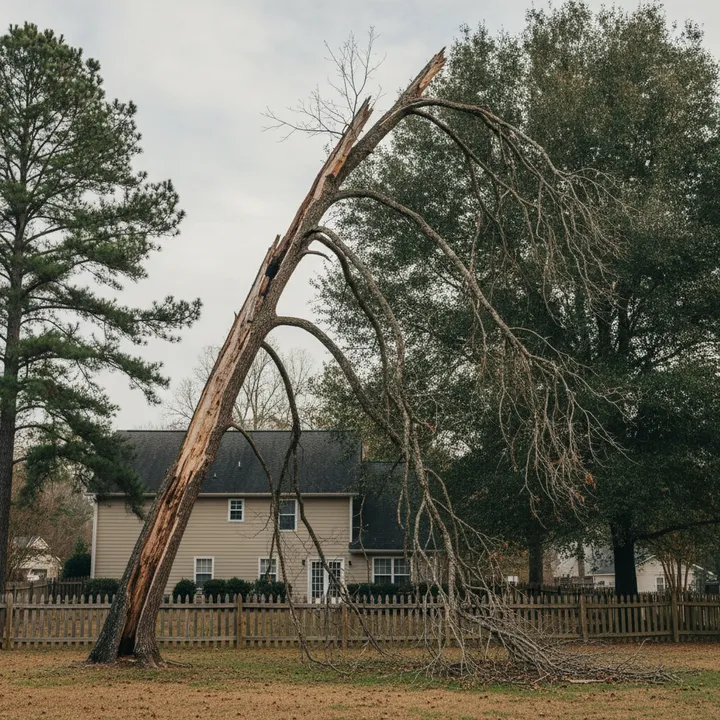
Most of the trees we take down are not surprises. A hardwood has leaned a little more each year, a pine has died back over the driveway, or a storm has split a crown and left half of it hanging over the roof. Removal is the right call when a tree is dead, dying, structurally unsound, or growing somewhere it can no longer stay safely.
It is also the call nobody likes to make. A tree that shades the porch or that the kids grew up with is hard to give up. Our certified arborist, Robin, looks at every removal in person and tells you straight whether it truly has to come out, or whether it can be pruned, braced, or watched for another season. When it does have to go, the same eye that assessed it plans a removal that protects everything around it.
Signs a tree may need removal
A few things worth a closer look. If you spot one, it is worth a free estimate.
New or worsening lean
A tree that has started leaning, or is leaning more than it used to, especially after a storm or a stretch of heavy rain.
Roots lifting or decaying
Heaving soil, exposed roots, or soft, fungus-covered roots where the trunk meets the ground.
Cracks in the trunk or limbs
Deep vertical cracks, splits, or open seams in the main stem or a large scaffold branch.
Large dead limbs overhead
Big bare limbs above the house, the driveway, or wherever people park, walk, and play.
Fungus or conks on the wood
Mushrooms or shelf fungus on the trunk or roots often signal decay working inside the wood.
Storm damage to the crown
A split crown, a hung-up limb, or more than about half the canopy broken or dead.
How we plan a safe removal
No two removals come down the same way. The method depends on access: how close the tree is to the house, whether a truck can reach it, how tall it is, and whether it is still sound enough to climb. Robin walks the site, and Larry, who runs our crane, decides what equipment fits your lot.
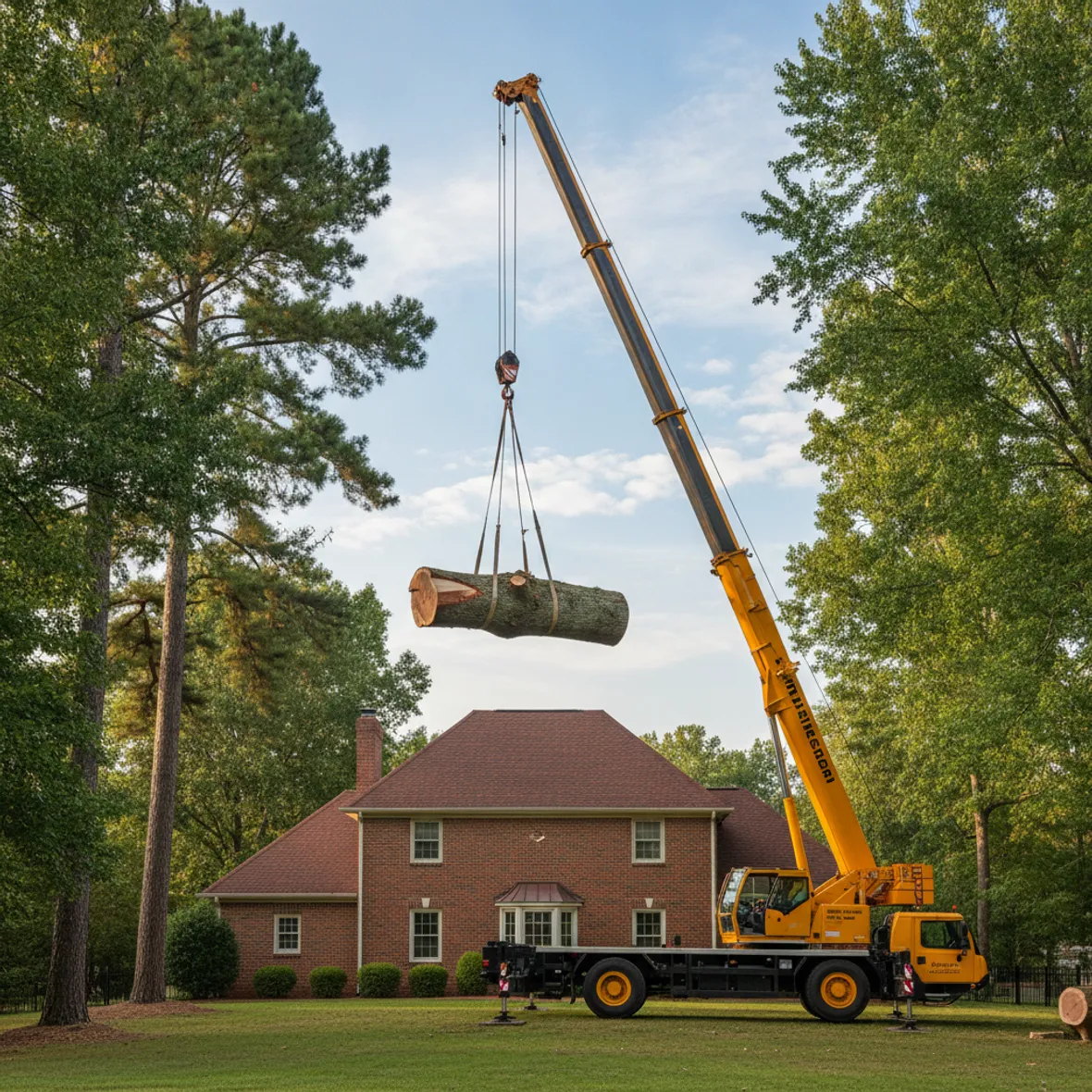
The goal is always the same: keep the weight controlled and keep it off your house, fence, and beds. That is why we reach for a crane on the hard ones. Lifting whole sections straight up and away means far less rigging over the roof and far less time spent in a tree that may no longer be stable.
Which method, and why
| The situation | How we take it down | Why it is the safer way |
|---|---|---|
| A big hardwood over the roof | Crane lift | Whole sections are lifted straight up and off, so little weight ever swings over the house. |
| A tall pine in a tight side yard | Expert climber | A roped climber removes it in controlled pieces where no truck or crane can reach. |
| Reachable canopy near the drive | Bucket truck | Fast, stable access to the crown without anyone having to climb the tree. |
| A storm-split or unstable tree | Crane or bucket, never climbed | We keep the crew off a trunk that is no longer sound and take it apart from the outside. |
What a removal day looks like
From the first call to a raked-clean yard.
- Free estimate
Robin comes out, looks at the tree and the access, and gives you a clear written price. No charge and no pressure.
- Permits and utilities
We flag anything that needs a utility locate or an HOA note, and handle the scheduling around it.
- Protect the site
On the day, we lay down protection, set the crane or rig the climb, and clear a drop zone away from the house and beds.
- Take it down
Section by section, kept clear of the roof, fence, and cars, with the crew working to a plan rather than improvising.
- Clear the debris
Brush is chipped, the wood is cut down or hauled, and the yard is raked so you can walk it the same day.
- Grind the stump, if you want it
An optional last step: we grind the stump below grade so you can replant, resod, or reclaim the spot.
What happens to the wood and debris
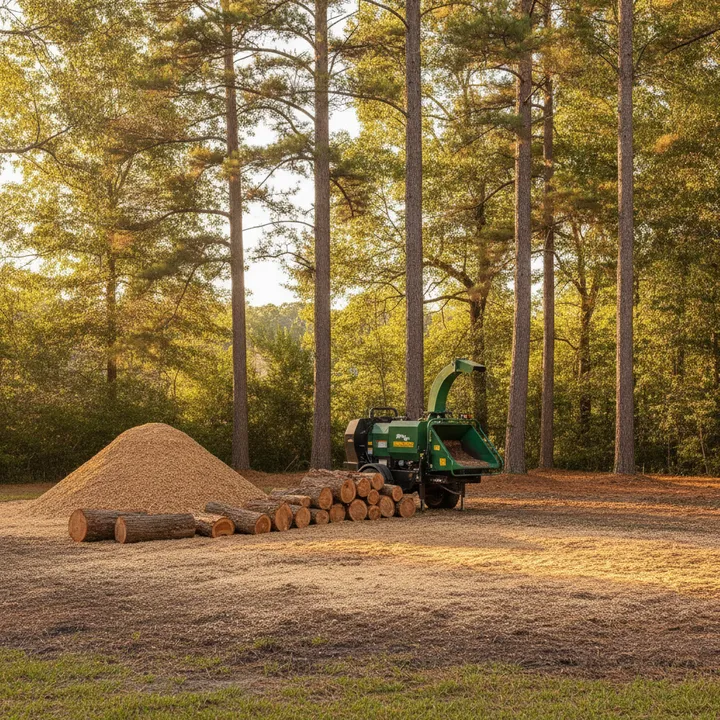
A removal is not finished until the yard is usable again. Brush and small limbs go through the chipper. The trunk is cut into rounds and either hauled away or left stacked as firewood, whichever you prefer. We rake the chips and sawdust so the spot is clean, not a crater of debris.
You decide what stays. Some homeowners keep the wood for a fireplace or a fire pit; others want every last scrap gone. Tell us at the estimate and we will price it either way.
Safety, licensing, and insurance
Tree removal is one of the most dangerous jobs in the trades. Trees are heavier and taller than they look, and they do not always fall the way you expect. Every year homeowners are hurt trying to take a tree down themselves. This is work for a licensed, insured crew with the right equipment, not a rented chainsaw and a ladder.
Engram’s is fully licensed and carries both workers’ compensation and liability insurance, so a dropped limb is never your liability. When you get an estimate, ask any company for proof of insurance; one that cannot show it is one you should not let near your house.
- Treat every downed or sagging power line as live, and stay well clear until the utility clears it.
- Do not park under, or let anyone stand near, a tree that is leaning or has hung-up limbs.
- For anything actively falling or already on the house, call our 24-hour line instead of approaching it.
Where we remove trees
Based in Canton and working across the north metro. If your town is close by, call and ask.
Tree removal questions
How much does tree removal cost?
There is no flat rate, because the price depends on the size of the tree, how close it is to the house and the lines, and how we have to reach it. That is exactly why the estimate is free and in writing: Robin looks at your specific tree and gives you a real number before any work starts.
Do I need a permit to remove a tree?
Some cities and many HOAs have rules about removing certain trees, especially in front yards or with protected species. We tell you what applies to your address at the estimate and handle the paperwork side where one is needed, so nothing catches you out after the fact.
Can you take down a tree right next to my house or a power line?
Yes. Tight, high-stakes removals are exactly what the crane and our climbers are for. We keep the weight controlled and lift sections away from the roof rather than dropping them, and we stay clear of live lines and coordinate with the utility when a tree is into the wires.
Do you grind the stump too?
Stump grinding is a separate step you can add to any removal. We grind it several inches below grade so you can replant, lay sod, or simply reclaim the space. Tell us at the estimate if you want it included in the price.
A tree just came down on my house at night. What do I do?
Get everyone clear of the tree and any lines, then call or text our 24-hour emergency line. We stabilize what is dangerous first and plan the full cleanup once everyone is safe.
Are you licensed and insured?
Yes. Engram’s is fully licensed and carries workers’ compensation and liability insurance on every job. Ask any tree company for proof before they start, and be wary of anyone who cannot show it.
Related services
Trimming and pruning
When a tree can be saved, the right cuts keep it strong, safe, and well shaped.
Learn more →Crane and bucket work
The crane with the extra-long boom that turns the hard removals into the safe ones.
Learn more →Stump grinding
Take the stump below grade so you can replant or reclaim the yard.
Learn more →Storm and emergency
24-hour response when a tree is down on the house or the driveway.
Learn more →Certified arborist
Risk and health assessments from the arborist who does every estimate.
Learn more →Free estimates, done by a certified arborist.
Tell us about the tree. Robin will come look and give you a straight answer.