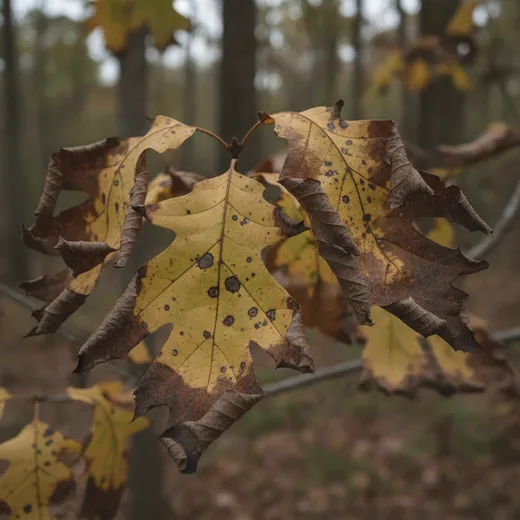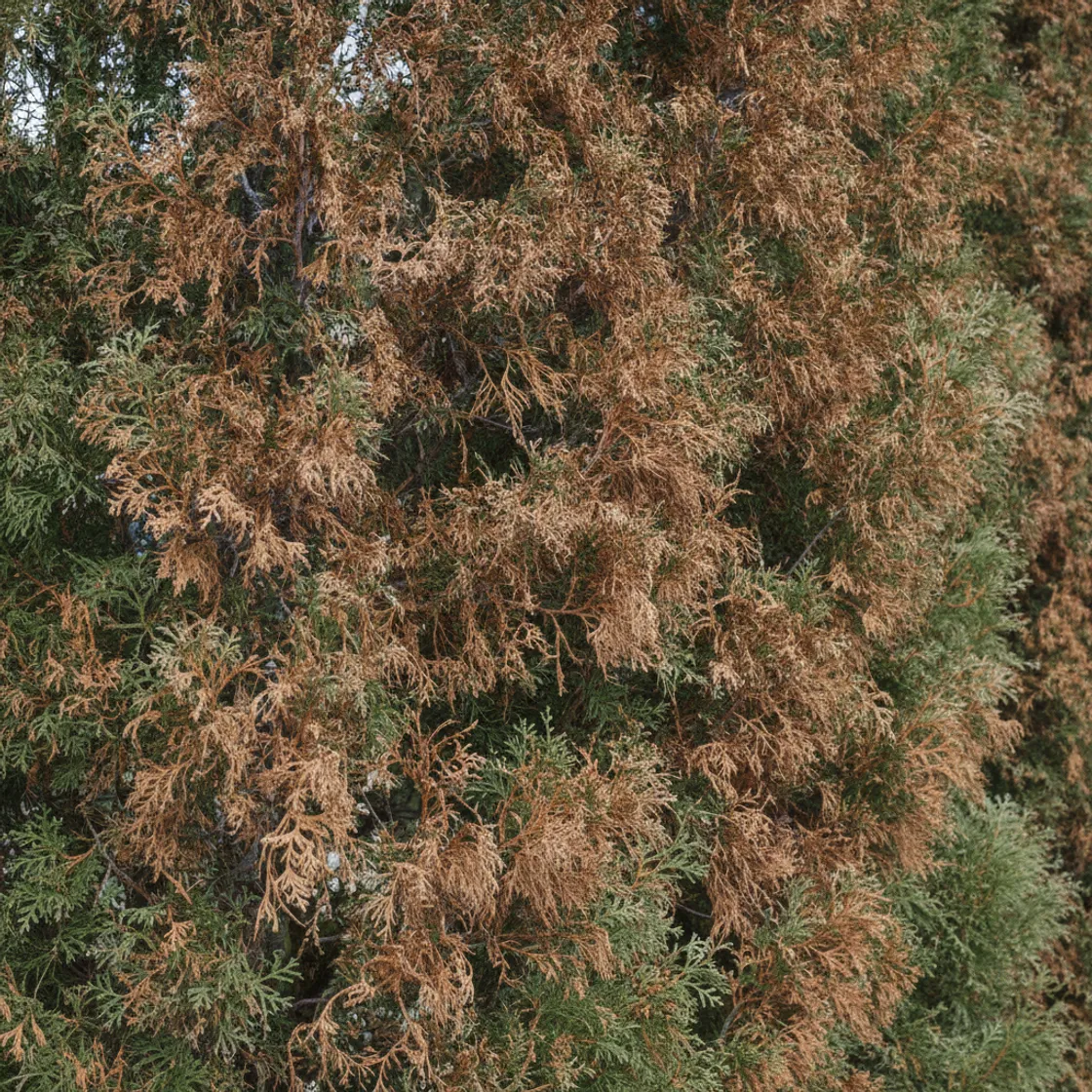
When a tree yellows out of season, the leaves are the messenger, not the problem. Yellowing, which arborists call chlorosis, means the leaves are not making enough chlorophyll, and several very different issues can cause it. Sorting them out is a bit of detective work, but the suspects are a short list.
Too little water
In the heat of a Georgia summer, the most common cause is simple: the tree is thirsty. Under drought stress, leaves yellow, then brown at the edges, then drop, often starting at the top and outer canopy. This is especially common in younger trees and in anything planted in fast-draining or compacted soil. A long, slow, deep soak once or twice a week usually turns it around.
Too much water
Confusingly, overwatering causes yellowing too. Our clay soils drain slowly, and roots sitting in soggy ground cannot take up oxygen or nutrients, so the leaves yellow much as they do in drought. If the ground around the tree stays wet and the yellowing is general, back off the water and check that the tree is not sitting in a low, poorly drained spot. Feel the soil a few inches down before you decide whether to add water or hold off.
Pests and disease
Sap-sucking pests like spider mites, aphids, and scale drain the tree and leave leaves yellow, stippled, or sticky; a close look at the undersides usually reveals them. Various leaf diseases yellow foliage as well, often in spots or blotches rather than evenly. Each calls for a different response, so it is worth identifying the culprit before treating.
The soil itself
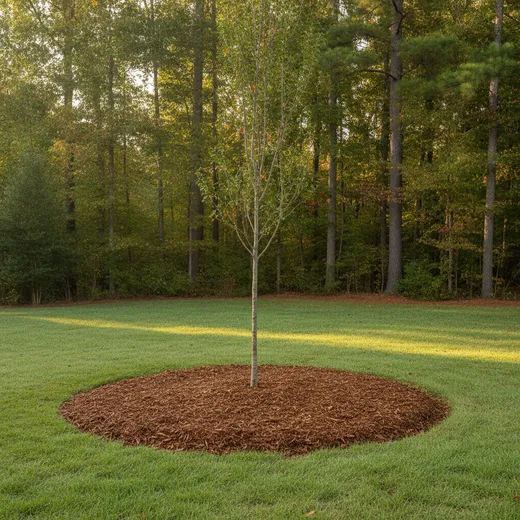
Sometimes the water is fine and the issue is the soil. When soil is compacted, or its chemistry locks up nutrients like iron, the roots cannot pull up what the leaves need, and the tree yellows even in good weather. Recently planted trees can also yellow from transplant shock while the roots establish. These take a bit more diagnosis, and often a soil assessment, to pin down.
How Engram's Tree Service can help
Off-season yellowing is worth taking seriously, because it is often the first visible sign of a problem you can still fix. Our certified arborist can tell whether you are looking at a watering issue, a pest, a disease, or the soil, and what to do about it. If your tree is yellow when it should be green, reach out for a free estimate and we will help you get to the bottom of it.